Home Office Guides

A workspace that works with the way you live.

Thoughtful, room-by-room guides for setting up an ergonomic home office — from the angle of your monitor to the warmth of your task light. Built for small apartments, shared rooms, and quiet corners.
Explore the guides   Talk with us

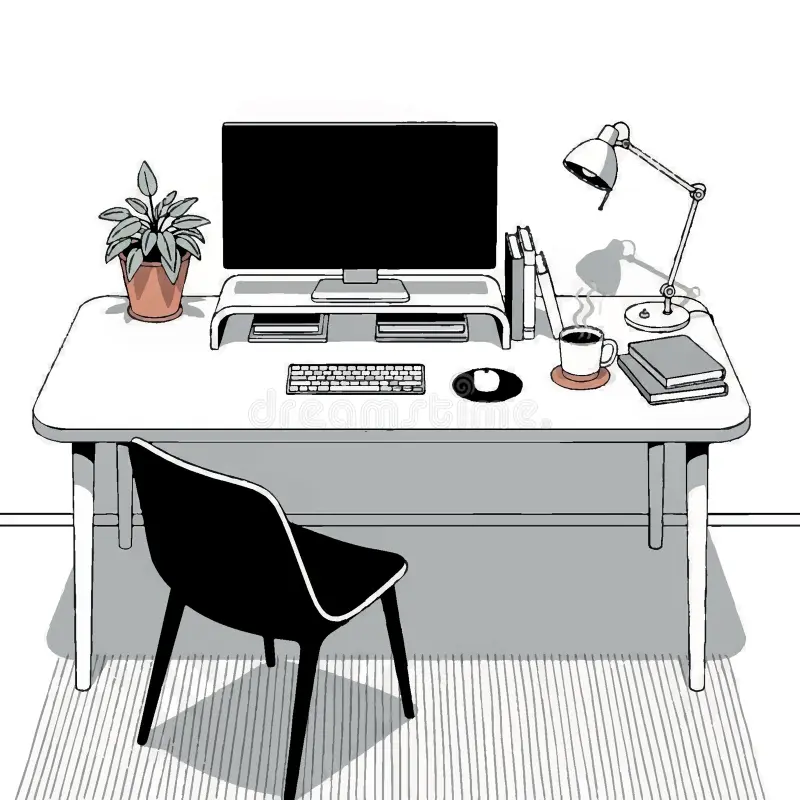
Illustration of a tidy home office desk with monitor, lamp and plant
What we cover

Four pillars of a comfortable workday

Each guide is grounded in everyday realities — limited square footage, mixed daylight, shared furniture — not idealized showrooms.

Screen geometry

Distance, height and tilt rules that work for laptops, single monitors and dual setups.

Layered lighting

Combine ambient, task and accent light to reduce glare during long focus blocks.

Seated posture

Chair adjustments, footrest options and short movement cues you can actually keep up with.

Quiet workflow

Sound shaping, notifications and small rituals that protect deep-work sessions.

How it works

Build your setup in four calm steps

Map the room

Note window direction, outlets and the path you walk most. The best desk spot is rarely the most obvious one.

Place the screen

Top edge near eye level, an arm's length away, perpendicular to bright windows.

Tune the chair

Hips slightly above knees, feet flat, lumbar gently supported, shoulders relaxed.

Layer the light

One warm overhead, one focused desk source, one soft accent for evening sessions.

Reader notes

Real desks, real fixes

"I rearranged my monitor against the side wall instead of facing the window — glare dropped immediately."

— Sloane Kettridge, brand designer

"The footrest tip changed my afternoons. I stopped slouching by 3pm without thinking about it."

— Wyatt Holloway, content strategist

"Adding a small warm lamp behind the screen made evening work feel less harsh on the eyes."

— Harper Linwood, software engineer

Do I need an expensive chair to start?

Not at all. Most setups improve with three free changes first: raise the screen with books, move the desk perpendicular to the window, and reset chair height so feet rest flat.

What if my desk is also my dining table?

Use a portable laptop riser and a removable desk mat. Resetting the surface at the end of the day helps the brain switch out of work mode.

Is natural light always better?

It is wonderful for mood, but direct sun on the screen creates strain. Position the monitor at a 90° angle to the window and add a sheer curtain if needed.

How often should I move during work?

A short stand or stretch every 45–60 minutes is a sustainable rhythm. Pair it with a small habit you already have, like refilling water.

New guides drop every month

Last update today. Reach out if a specific challenge in your space is missing — we read every note.

Send us your question